Head of state
SourcedAlso First Secretary of the Communist Party of Cuba since 19 April 2021. Salvador Valdés Mesa is Vice President of the Republic.
Partial cabinet. Official Cuban government pages (presidencia.gob.cu, parlamentocubano.gob.cu, cubaminrex.cu) returned errors (HTTP 503) on 16 October 2026, so every claim is sourced, not verified. The ministers listed are taken from the Council of Ministers membership as of 16 March 2026 reported by Wikipedia, which cites the government website. Ministries affected by the July 2026 restructuring (Economy and Planning, Finance and Prices, Higher Education, Science, Technology and Environment, Agriculture, Food Industry) and those that Spanish Wikipedia lists as merged in 2026 (Construction, Industries, Domestic Trade, Foreign Trade and Investment) are left out because their current heads could not be confirmed. Labour and Social Security is also left out: the sources conflict (vacant, or Jesús Otamendiz Campos since 2025). Titles are translated from Spanish. Start dates are given only where a source states an exact date.
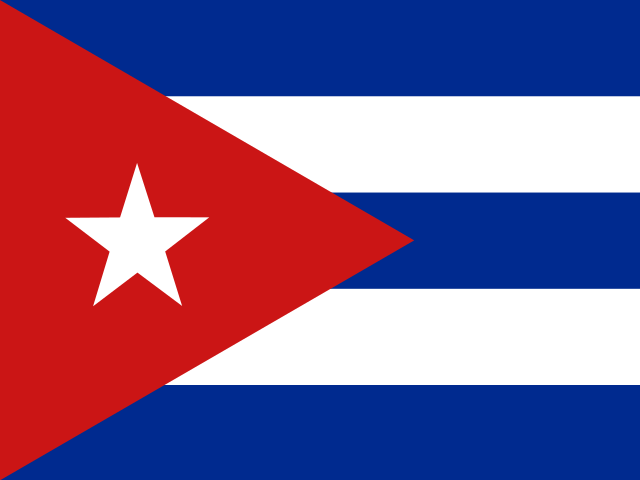
Cuba is an one-party state[1]. The head of state is President Miguel Díaz-Canel[3][4][5]. The government is led by Prime Minister Manuel Marrero Cruz, in office since 21 Dec 2019[3][5][6]. Govpedia records 18 members of its cabinet.
At a glance[2]
Leadership
Head of state
SourcedAlso First Secretary of the Communist Party of Cuba since 19 April 2021. Salvador Valdés Mesa is Vice President of the Republic.
Head of government
SourcedIn government: Communist Party of Cuba
Executive
0 of 18 verified on official pages
On 30 July 2026 the National Assembly of People's Power ratified a law reducing the central state administration from 27 to 21 bodies (counting the Central Bank), merging Economy and Planning with Finance and Prices into a single Economy and Finance ministry, Science and Technology with Higher Education, and Agriculture with the Food Industry. No appointments to the merged ministries were found in the pages opened. Dates are the start of each minister’s current term in this government.
Digital government
UN E-Government Development Index[11]
2024
0.492rank 139 of 193
Record of changes
Evidence
WikipediaReferenceChecked 12 Oct 2026
Mohammed Le Doze and contributors (ODbL)ReferenceChecked 1 Nov 2026
WikipediaReferenceChecked 12 Oct 2026
WikipediaReferenceChecked 16 Oct 2026
Wikipedia (Spanish)ReferenceChecked 16 Oct 2026
WikipediaReferenceChecked 16 Oct 2026
WikipediaReferenceChecked 16 Oct 2026
Infobae (EFE)NewsChecked 16 Oct 2026
Wikipedia (Spanish)ReferenceChecked 16 Oct 2026
News DigitalesNewsChecked 16 Oct 2026
United Nations DESADatasetChecked 12 Oct 2026